

A stroke changes life in an instant. Simple movements that were once effortless such as walking, holding a cup, speaking, or maintaining balance can suddenly feel unfamiliar and challenging. For stroke survivors and their families, the recovery journey often comes with uncertainty, fear, and an urgent need for reassurance that improvement is possible.
Understanding what exercise is good for stroke patients is a critical part of recovery. Exercise after a stroke is not about pushing the body beyond limits. It is about retraining the brain, restoring movement patterns, rebuilding strength, and gradually regaining independence. When guided by structured rehabilitation and medical supervision, therapeutic exercises become one of the most powerful tools in stroke recovery.
Understanding Stroke and Its Impact on the Body
A stroke occurs when blood flow to a part of the brain is interrupted, leading to damage in brain cells that control movement, sensation, speech, and coordination. The effects vary from person to person depending on the severity and location of the stroke.
Common post stroke challenges include:
- Muscle weakness or paralysis on one side of the body
- Poor balance and coordination
- Difficulty walking or standing
- Reduced hand and finger control
- Fatigue and low endurance
- Cognitive and speech difficulties
Because the brain controls movement, recovery requires retraining neural pathways through repetitive, purposeful movement. This is where exercise based rehabilitation becomes essential.
Why Exercise Is Essential for Stroke Recovery
After a stroke, inactivity can worsen stiffness, muscle tightness, and weakness. Carefully planned exercises help stimulate neuroplasticity, the brain’s ability to reorganize and form new connections. This allows patients to relearn lost movements and improve functional abilities.
When done correctly, exercises for stroke patients help:
- Improve muscle strength and control
- Enhance balance and coordination
- Reduce stiffness and spasticity
- Promote independent mobility
- Support emotional confidence and motivation
The right exercise program is always progressive, patient specific, and medically supervised.
What Exercise Is Good for Stroke Patients?
Exercises for stroke recovery focus on restoring movement rather than building muscle mass. They are designed to improve coordination, balance, and functional use of affected limbs.
Range of Motion Exercises
These exercises help maintain joint flexibility and prevent stiffness. They are especially important in the early stages of recovery when voluntary movement may be limited.
Range of motion exercises support:
- Joint health
- Muscle flexibility
- Reduction of pain and tightness
They can be assisted or active, depending on the patient’s ability.
Strengthening Exercises
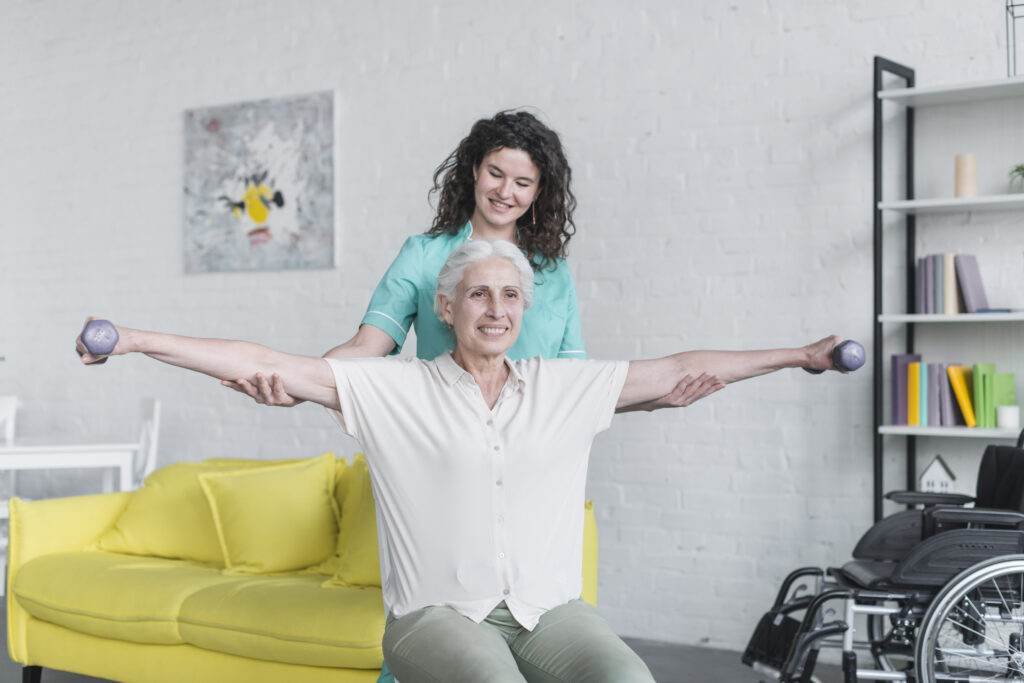
Muscle weakness is common after a stroke, particularly on one side of the body. Gentle strengthening exercises help rebuild muscle function and support daily activities such as standing, walking, and lifting light objects.
Strengthening exercises improve:
- Limb control
- Postural stability
- Confidence in movement
Resistance is increased gradually under professional supervision.
Balance and Coordination Exercises
Balance impairment significantly increases the risk of falls after a stroke. Balance training focuses on improving body awareness and postural control.
These exercises help:
- Improve standing and walking stability
- Reduce fear of falling
- Enhance coordination between body segments
Balance training is a core component of stroke rehabilitation.
Gait Training Exercises
Walking often becomes difficult after a stroke due to weakness, stiffness, or poor coordination. Gait training exercises focus on restoring natural walking patterns.
Gait training helps:
- Improve step symmetry
- Enhance walking endurance
- Increase independence in mobility
Therapists often use parallel bars or assistive devices during early stages.
Functional Task Based Exercises
Functional exercises simulate real life activities such as reaching, grasping, sitting, and standing. These movements help patients regain independence in daily routines.
Functional training improves:
- Hand and arm coordination
- Self care abilities
- Confidence in everyday activities
This approach directly links therapy to real world function.
Importance of Early and Consistent Rehabilitation
Stroke recovery is most effective when rehabilitation begins early and continues consistently. Delayed or irregular therapy can limit progress and lead to secondary complications such as contractures or muscle shortening.
Regular exercise supports:
- Faster neurological adaptation
- Improved muscle memory
- Better long term functional outcomes
Consistency matters more than intensity in stroke rehabilitation.
Emotional and Psychological Benefits of Exercise After Stroke
Stroke recovery is not only physical. Emotional challenges such as anxiety, depression, and loss of confidence are common. Structured exercise programs help restore a sense of control and achievement.
Exercise contributes to:
- Improved mood and motivation
- Reduced feelings of dependency
- Enhanced self confidence
A supportive rehabilitation environment plays a vital role in emotional healing.
Role of Rehabilitation Centres in Stroke Recovery
Stroke rehabilitation requires coordinated care involving physiotherapy, occupational therapy, and medical supervision. A specialized rehabilitation centre provides a structured environment that supports safe and effective recovery.
At Raksha Health Care, stroke rehabilitation focuses on:
- Comprehensive neurological assessment
- Individualized exercise and therapy planning
- Balance, gait, and functional training
- Continuous monitoring and progression
- Compassionate, patient centered care
This integrated approach ensures that recovery addresses both physical and functional needs.
When Should Stroke Patients Start Exercising?
Exercise should begin as soon as the patient is medically stable. Early intervention helps prevent complications and improves long term outcomes. However, all exercises must be prescribed and supervised by qualified rehabilitation professionals.
Patients should seek professional guidance if:
- Movement feels unsafe or painful
- Balance is severely impaired
- Muscle stiffness worsens
- Fatigue limits participation
Safety is always the priority in stroke rehabilitation.
Conclusion
Stroke recovery is a gradual journey that requires patience, persistence, and professional guidance. Understanding what exercise is good for stroke patients helps families and survivors make informed decisions about rehabilitation. The right exercises, performed consistently and safely, can restore movement, independence, and confidence.
Raksha Health Care remains committed to delivering credible, compassionate, and medically guided stroke rehabilitation. With structured therapy and personalized care, stroke survivors can move forward toward meaningful recovery and improved quality of life.
Contact Details
- H.no:#6-3-1246,Raj Bhavan Rd, Sangeet Nagar, Somajiguda, Hyderabad, Telangana 500082
- rakshahc.customercare@gmail.com
- 24/7
- +91 994 995 9994
Make Appointment
Call Us
+91 9949959994
Raksha Healthcare Centre
Copyright © 2024 All rights reserved.